The Emergency, Crisis, and Disaster Management System is considered a cornerstone in achieving comprehensive preparedness to face crises and challenges. It aims to coordinate efforts to ensure the protection of lives and property, manage response operations, and ensure the continuity of vital sectors and essential services in the face of diverse and increasing risks.
In a rapidly changing world full of challenges, the need for integrated systems that are capable of anticipating potential risks and dealing with them efficiently and swiftly has become increasingly important. This system is based on a comprehensive strategic approach that includes anticipation and prevention, strengthening preparedness, effective response, rapid recovery, and continuous learning from past experiences.
The system also enhances coordination and integration among all relevant entities, enabling communities and nations to build greater resilience and a higher capacity to address various types of challenges, whether natural, health-related, industrial, or security-related. Through the implementation of this integrated approach, the system contributes to achieving sustainable development, ensuring community well-being, and strengthening confidence in the readiness of institutions to manage crises efficiently and professionally.
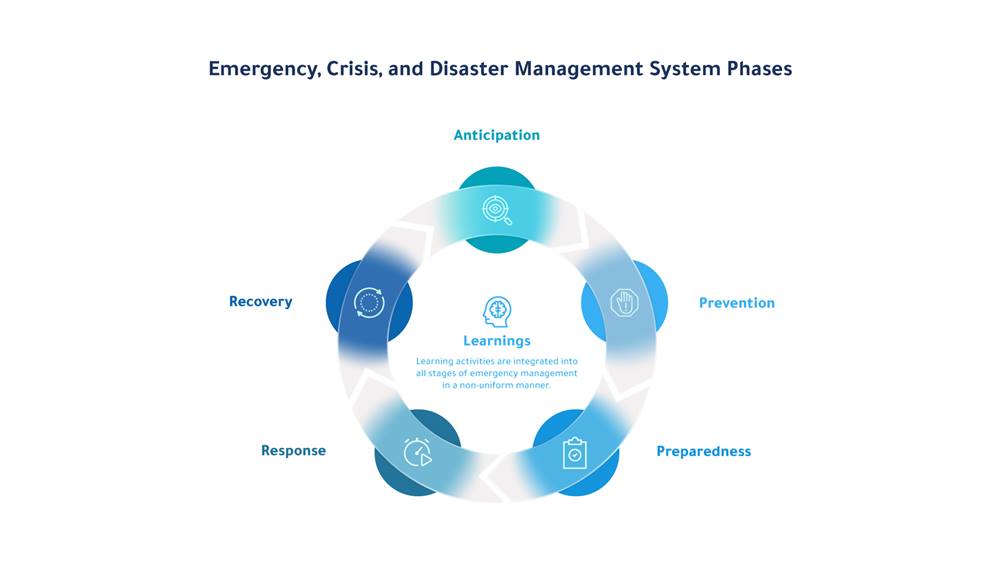
System Phases:
The phases of emergency, crisis, and disaster management at the Abu Dhabi Emergency, Crisis and Disaster Management Center represent a comprehensive model that covers six key domains, reflecting an integrated capability to deal with risks efficiently and effectively. These phases form a connected cycle that covers the entire crisis management process, starting from early risk anticipation and assessment, and extending to recovery and continuous learning.
This integrated approach aims to enhance preparedness, ensure rapid response, and maintain the continuity of critical operations by providing a clear framework for prevention, preparedness, emergency management, and recovery. This ensures the protection of lives and property while supporting sustainable development and readiness for all types of crises.
In this context, the Center’s system works to achieve a balance between strategic planning and field implementation, while ensuring effective coordination among all relevant entities to guarantee the highest levels of efficiency in managing crises.